ENQUIRE NOW


Enquire
Enquire now and get a FREE assessment of your documents and available options

Choose
We find you the perfect medical school to suit your needs & guarantee your entry

Support
On-ground support with help from medical students and doctors on campus

Practice
Our doctors will help you register in the UK or EU countries upon graduation


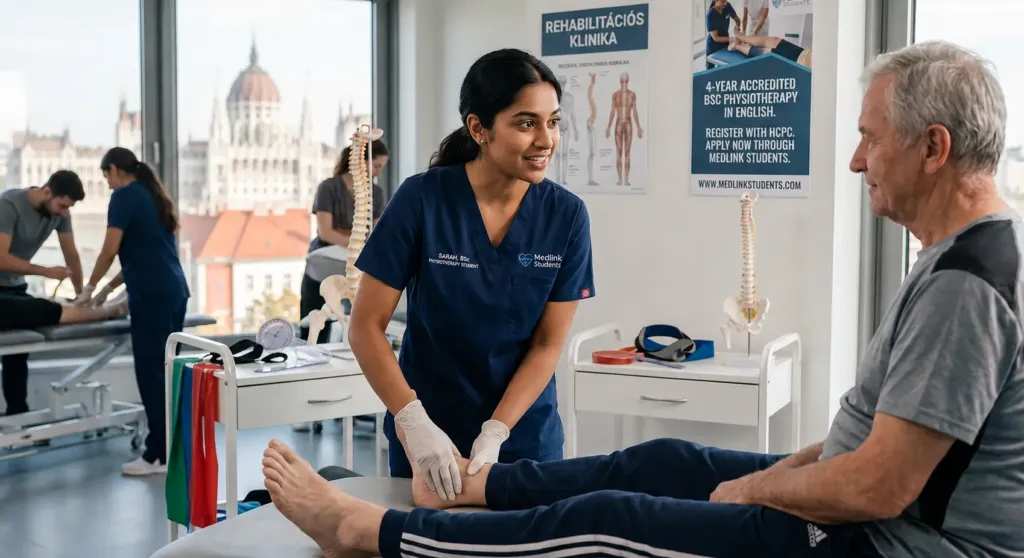
A physiotherapy degree in Europe in English takes 4 years with a curriculum that is designed to build expertise across the full scope of the profession.
This includes the health science theory (anatomy, physiology, biomechanics, and neuroscience), pre-clinical theory (musculoskeletal, neurological, cardiorespiratory, paediatric, and rehabilitation), and comprehensive clinical experience with real patients. Practical training takes place in hospitals, outpatient physiotherapy departments, sports medicine clinics, community care, and more.
Best of all, everything is taught in English and the student cohort at these universities is very diverse, so you'll get to study alongside peers from all over the world.
Upon graduation, students receive an internationally recognised BSc degree. Whether you intend to remain in Europe, return home, or pursue a career in the UK, a physiotherapy degree from a recognised European university gives you an exceptional start to a successful career.
Important: If you're unsure where to start, Medlink Students offers free consultations to guide you through the entire process, from choosing the right physiotherapy university to submitting your application, securing your place, and helping you get settled in.
The entry requirements to study physiotherapy in Europe in English are:
Some universities may also require taking an entrance exam or interview.
Students also need to submit translated, notarised & legalised documents such as a health certificate, academic transcripts, CV, letters of recommendation, eligibility certificates, and more.
Getting into an English language physiotherapy programme in Europe is competitive, but significantly easier than securing a place in the UK.
If you want to check whether you meet the entry criteria for physiotherapy in English, Medlink Students offers free consultations with our team of academic advisors.
Sign up and schedule your appointment here to learn how we can help you secure your spot at 1 of Europe's top universities.
Tuition fees for physiotherapy in Europe cost between and per year, depending on the country and university.
Living expenses vary by country, but students generally spend between and a month on rent, utilities, transport, food, and leisure.
The top European universities offering physiotherapy in English for international students include:
Location: Budapest, Hungary
Programmes in English: Physiotherapy, Medicine, Dentistry, Pharmacy, Pre-med
Physiotherapy tuition fees: per year
Entrance exam: Yes
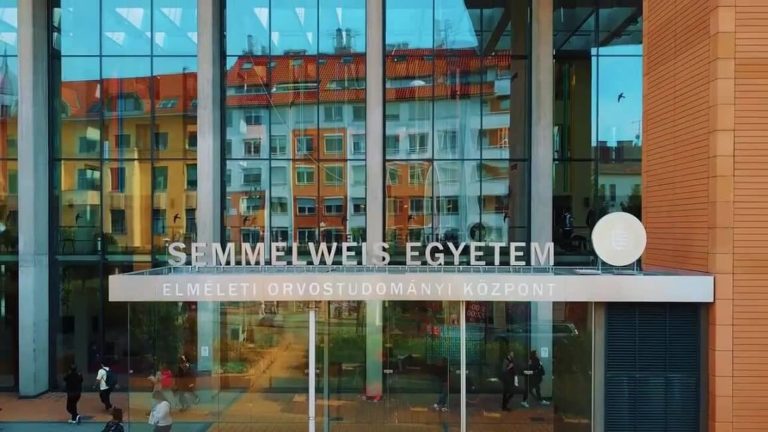
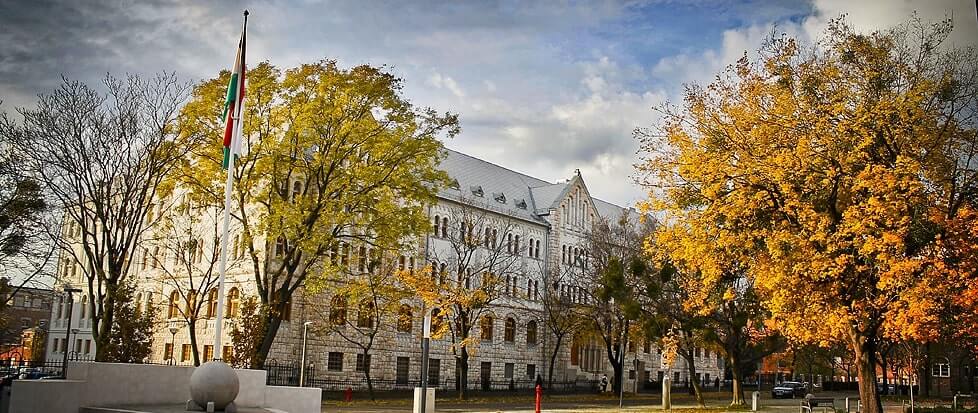
Semmelweis University is 1 of the most prestigious universities in Europe for health sciences. It was founded in 1769 in Budapest and ranked among the world’s top 200 universities in Medical and Health by Times Higher Education. It has built an outstanding reputation for clinical training, research, and international education attracting students from over 100 countries to its English-language programmes.
The physiotherapy programme here lasts 4 years and is taught entirely in English. The curriculum includes comprehensive theoretical lessons, followed by practical skills training in for musculoskeletal, neurological, cardiorespiratory, and paediatric physiotherapy with clinical placements in Semmelweis's own affiliated teaching hospitals and clinical sites in Budapest.
Budapest is the capital of Hungary and is itself 1 of Europe's most exciting student cities. It is affordable, safe, culturally rich, and well connected to the rest of Europe.
Location: Pecs, Hungary
Programmes in English: Physiotherapy, Medicine, Dentistry, Pharmacy, Nursing, Pre-med
Physiotherapy tuition fees: per year
Entrance exam: Yes
The University of Pecs was established in 1369, making it the oldest university in Hungary.
It is also 1 of the largest and offers a large variety of medical and healthcare degrees in English, including a 4-year physiotherapy BSc degree. Here, students can also expect to build a strong theoretical foundation in the health sciences in the first few years before getting extensive practical experience with patients in real-world clinical settings.
The city of Pecs itself is both culturally and historically significant for Hungary, as it is home to many historic buildings, including a UNESCO World Heritage site. It is known for its historical charm, great arts scene, and easygoing atmosphere that welcomes all the students coming to the city.
Accredited European physiotherapy degrees are recognised throughout Europe and in many countries across the world.
European physiotherapy degrees are accredited by national regulatory authorities and structured to comply with EU higher-education standards. Programmes include extensive clinical training alongside theoretical modules to ensure graduates meet international professional competency requirements.
Degrees from EU physiotherapy programmes are automatically recognised throughout EU countries. This means that once you graduate you will be able to become a physiotherapist in any EU country, subject to local licensing requirements.
The global demand for qualified physiotherapists continues to grow, driven by ageing populations, a rise in chronic conditions, and an increased focus on rehabilitation and preventive care. Once you graduate with your physiotherapy degree, you will have the qualification and clinical experience to work in:
Yes. Graduates of accredited European physiotherapy programmes can register to practise in the UK. The process is managed by the Health and Care Professions Council (HCPC), the UK regulatory body for physiotherapists.
As part of the application, the HCPC will assess whether your education, training and professional experience meet the UK standards of proficiency for physiotherapists. You will need to provide evidence such as your professional qualification certificate, a completed course information form from your university, details of theoretical and practical training hours, and evidence showing how your training and experience meet HCPC standards.
You must also meet the HCPC’s English language requirements. Studying in English may be helpful, but it does not automatically remove the need to provide recognised evidence of English proficiency unless your qualification meets HCPC’s qualifying-country criteria or you provide an accepted English language test result.
After assessment, the HCPC may approve your application, ask you to complete a test of competence, or refuse the application if the standards are not met.
Once registered, you can use the protected title “physiotherapist” or “physical therapist” and practise in the UK as an HCPC-registered physiotherapist.
Studying physiotherapy in Europe in English is an exceptional choice because:
Fill out our quick enquiry form to book a free consultation with our team and get personalised guidance on programmes, admissions, and application requirements for studying physiotherapy in Europe in English.Our advisors can help you choose the right physiotherapy university and course, explain the application process, and support you every step of the way all the way through graduation and beyond.
A physiotherapy bachelor degree in Europe takes 4 years to complete.
Hungary is currently 1 of the strongest countries to study physiotherapy in Europe in English. It offers high-quality education, internationally recognised degrees, affordable tuition fees, and excellent clinical training opportunities.
To study physiotherapy, you need a strong background in science subjects. Most universities ask for Biology and Physics, as well as proof of English language proficiency. Some physiotherapy schools require sitting an entrance exam or interview, so you will need to prepare for that as well. Medlink Students can assess your specific qualifications, advise on the best university match for you, and provide you with exam/interview prep materials that are made specifically for your chosen university.
To study physiotherapy abroad, you need to find the right physiotherapy university, fulfil their entry requirements, and prepare the required documents with legalised, notarised and translated academic transcripts, proof of English proficiency, and identification documents. Keep in mind that the application process varies by country and university. Medlink Students can manage the entire process for you, from choosing your university to submitting your application and helping you settle in on arrival.
Yes, European physiotherapy universities accept several English certificates and can even waive the requirement entirely for applicants who have English as their primary language.
Yes. Physiotherapy bachelor's degrees from accredited European universities that meet national and EU education standards are recognised internationally. Graduates can apply for professional registration in the UK (HCPC), across EU member states, and in many countries worldwide, subject to local regulatory requirements.
Studying physiotherapy in Hungary is currently 1 of the most affordable options. Tuition fees here are between and per year.
Since you’ll be interacting with real patients, a basic working knowledge of the local language can be helpful in practice. Some universities provide language support to help students build confidence before clinical placements begin. Medlink Students can provide details depending on the university you’ve chosen.
Living costs vary significantly by country, but most physiotherapy students in Europe typically spend between and per month on rent, food, transport, and leisure, making physiotherapy in Europe a much more financially accessible option.
Yes, you can. To work as a physiotherapist, you will usually need to apply for professional registration or licensing with the local national authority. You will also need to meet local language requirements, submit your degree documents, and provide evidence of your clinical training.
A European physiotherapy degree can give you strong career opportunities in hospitals, rehabilitation centres, private clinics, sports facilities, elderly care, paediatrics, research, and more.
In most European countries, international students are permitted to work part-time during term time and full-time during semester breaks, meaning you can even have some income while you study.
Most physiotherapy universities in Europe have a single annual intake, typically in September or October. Some institutions have earlier application deadlines, so it's important to begin the process as early as possible. Medlink Students can advise on exact deadlines for each university.


Receive exclusive medical school admission guides, tips from doctors, and university updates direct to your inbox.
You’re on the list!
Thanks for subscribing. Keep an eye on your inbox for our next update.