ENQUIRE NOW
Located in: Greece


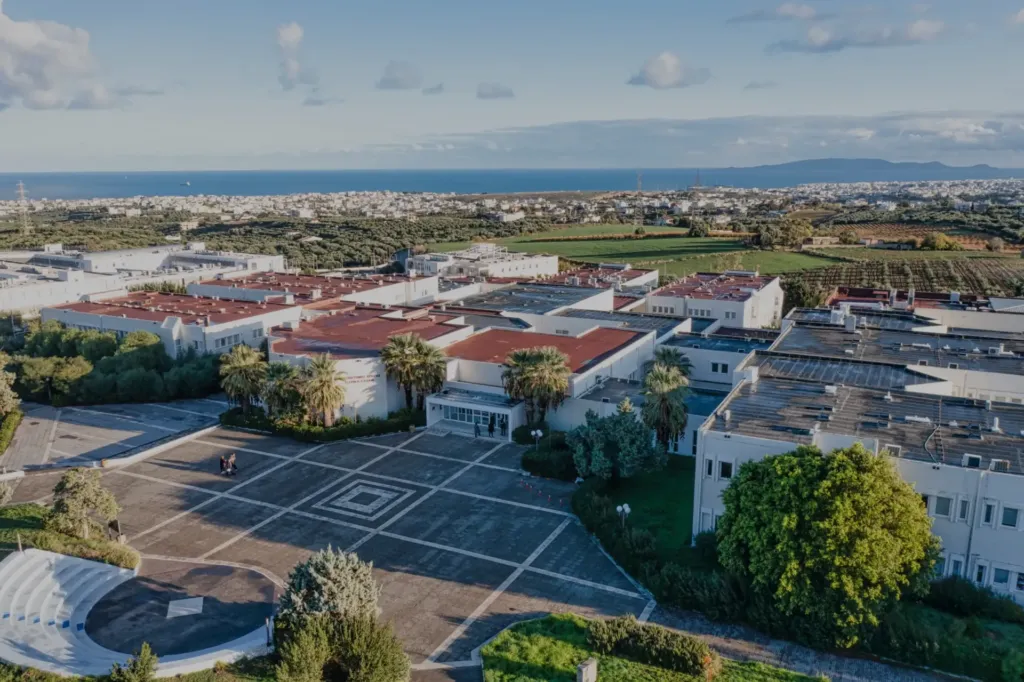

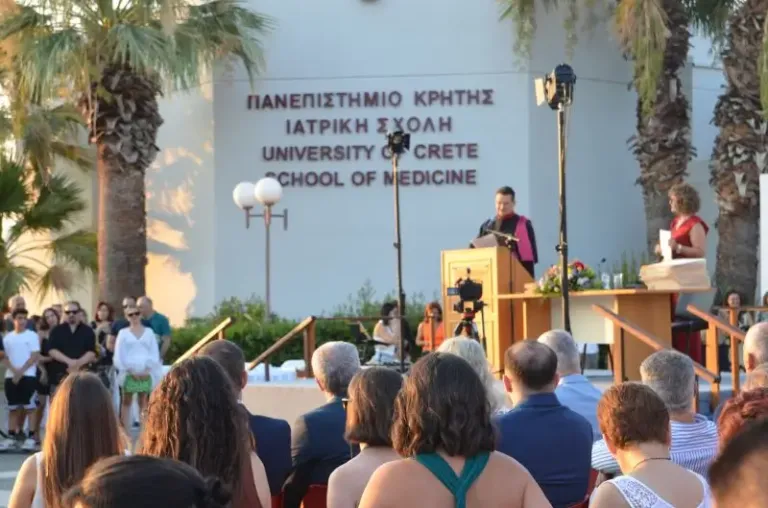
The University of Crete (UoC) is a public university established in 1973 on the island of Crete in Greece. The university is research-focused and collaborates with national and international universities, research centers, and establishments, while supporting a wide range of European and global academic programmes.
UoC operates across multiple campuses in Rethymnon and Heraklion with the School of Medicine being founded in 1984 in Heraklion. Clinical training is carried out at the University Hospital of Heraklion, primary health care centers in Crete, and in collaboration with hospitals throughout the island.
The University of Crete offers a 6-year undergraduate medicine programme in English for international students at its Heraklion (Voutes) campus.
UoC does not offer a graduate entry pathway into medicine.
University of Crete medical programme tuition fees cost per year.
The admission requirements for the University of Crete medicine programme ask applicants to be international students (non-Greek citizens) who have completed secondary education outside Greece and attended the final 2 years of school abroad. Additional requirements include English-language proficiency at a B2 level or higher.
Accepted qualifications include:
There is no entrance exam. Instead, prospective students are evaluated based on grades and qualifications. Shortlisted applicants are then invited to an online interview conducted by the university’s admissions committee.
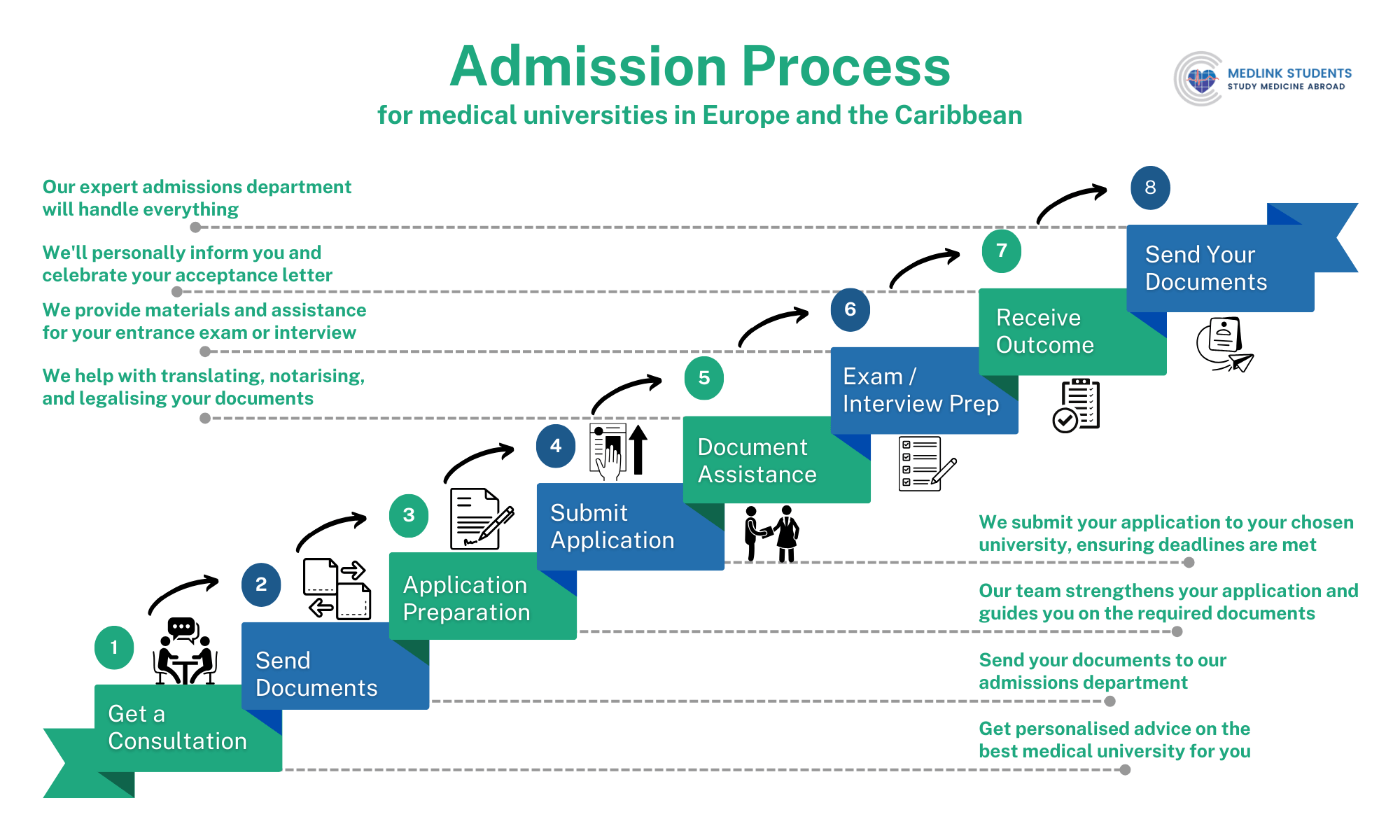
Applying to the University of Crete’s international programme in medicine requires careful preparation, strict adherence to admission criteria, and submission of legally verified documents. All documents must comply with Greek regulations, and translations must be formally certified and apostilled. You also need to manage application timelines, academic equivalency evaluations, and interviews, all while competing for a limited number of seats. Medlink Students simplifies this process by handling every stage of the application. Our team of admissions experts ensures that all documents meet all legal and academic standards, while providing guidance on eligibility, selection criteria, and interview prep. With us by your side, you can forget about the legal intricacies of applying abroad and concentrate on preparing for your future studies.
The University of Crete English medical programme is accredited by the Hellenic Authority for Higher Education (HAHE). Recognition of the University of Crete medical degree is under the Greek higher education system, meaning it is recognised across the European Union and in many other parts of the world.
The international programme in medicine at the University of Crete uses the European Credit Transfer and Accumulation System (ECTS), ensuring credit and qualification equivalence within the EU through Greece’s participation in the European higher-education framework.
UoC is also listed in the World Directory of Medical Schools (WDOMS UoC), enabling graduates to apply for licensure internationally.
The University of Crete medical programme curriculum includes both pre-clinical and clinical training components, as per EU standards. The first years focus on foundational biomedical sciences, which is then followed by clinical rotations. The curriculum is centred around small-group teaching, case-based learning methods and early exposure to patient-care settings.
Teaching facilities at UoC include a university hospital complex, anatomy and practical skills laboratories, a library and digital learning resources, and an international office offering support services for non-Greek students. Upon graduation, students are awarded a medical degree (MD), recognised throughout Greece, the EU and many other countries worldwide.
Clinical training for the English-taught Medicine programme mostly takes place at the main affiliated teaching hospital, the University Hospital of Heraklion, and at several primary health care centres and collaborating hospitals across Crete.
Students at the UoC School of Medicine begin intensive clinical clerkships in semesters 9 and 10, with core rotations in Internal Medicine and Surgery, each lasting 16 weeks. During clinical training, students rotate through specialities such as internal medicine, surgery, paediatrics, obstetrics & gynaecology, psychiatry, and other sub-specialties under supervision of experienced professionals and academic staff.
The University of Crete offers student-residence halls on its campuses, with limited places available. Priority is generally given to students from low-income or priority categories. The residence halls provide furnished rooms, access to communal study areas, dining facilities, and Wi-Fi and utilities.
For students not placed in university housing, Medlink Students and the university’s Welcome Office both provide support services, including accommodation assistance, guidance for finding private apartments and on-ground support to welcome you when you arrive.
The University of Crete is located on the island of Crete, where students can enjoy a welcoming atmosphere for international students with a mild Mediterranean climate. UoC’s campuses are located in Heraklion and Rethymnon, which are university towns with plenty of international students, historical landmarks, cafés, and beautiful beaches
Living costs for medical students in Crete are generally moderate compared to other European destinations. Monthly expenses depend on lifestyle and accommodation choice but typically range between .


The University of Crete operates two campuses in Rethymnon and Heraklion on the island of Crete, Greece. The International Program in Medicine is based at the Heraklion (Voutes) campus.
Yes. The University of Crete offers an English-taught International Program in Medicine designed for international students.
Tuition fees for the Crete medical school English programme are per academic year.
There is no written entrance exam. University of Crete medical programme application requirements include a grade-based evaluation and an online interview with the selection committee.
Yes. The degree is accredited by the Hellenic Authority for Higher Education and listed in the World Directory of Medical Schools. It follows the European Credit Transfer and Accumulation System (ECTS) and is recognised within the European Union and in many countries internationally.
Applicants must have a high-school diploma, English language proficiency (B2 level), and good grades. Shortlisted applicants are then invited to an interview.
The University of Crete provides limited student housing in residence halls. Typically, international students rent out private accommodation in Heraklion or Rethymnon.