ENQUIRE NOW
Located in: Romania



Founded in 1990, ULBS is a state-funded public university in Romania. It is named after the philosopher, poet, and playwright Lucian Blaga, and has enrolled approximately 15,000 students across all programmes.
The Faculty of Medicine is located near the city centre of Sibiu, and is facilitated by the university's affiliation with the Sibiu County Emergency Clinical Hospital and other healthcare institutions.
The Lucian Blaga University of Sibiu offers a 6-year (12-semester) medicine programme and a 6-year dentistry programme, both taught entirely in English.
For the medicine programme, tuition fees for EU/EEA students are , while Non-EU students pay .
Meanwhile, dentistry tuition fees are set to for EU students and for non-EU applicants.
The core requirements for entry to ULBS medicine in English are:
Admission ranking for EU/EEA candidates is based on their baccalaureate average score and high school grades. In this case, the Biology-Chemistry interview serves as a tie-breaker.
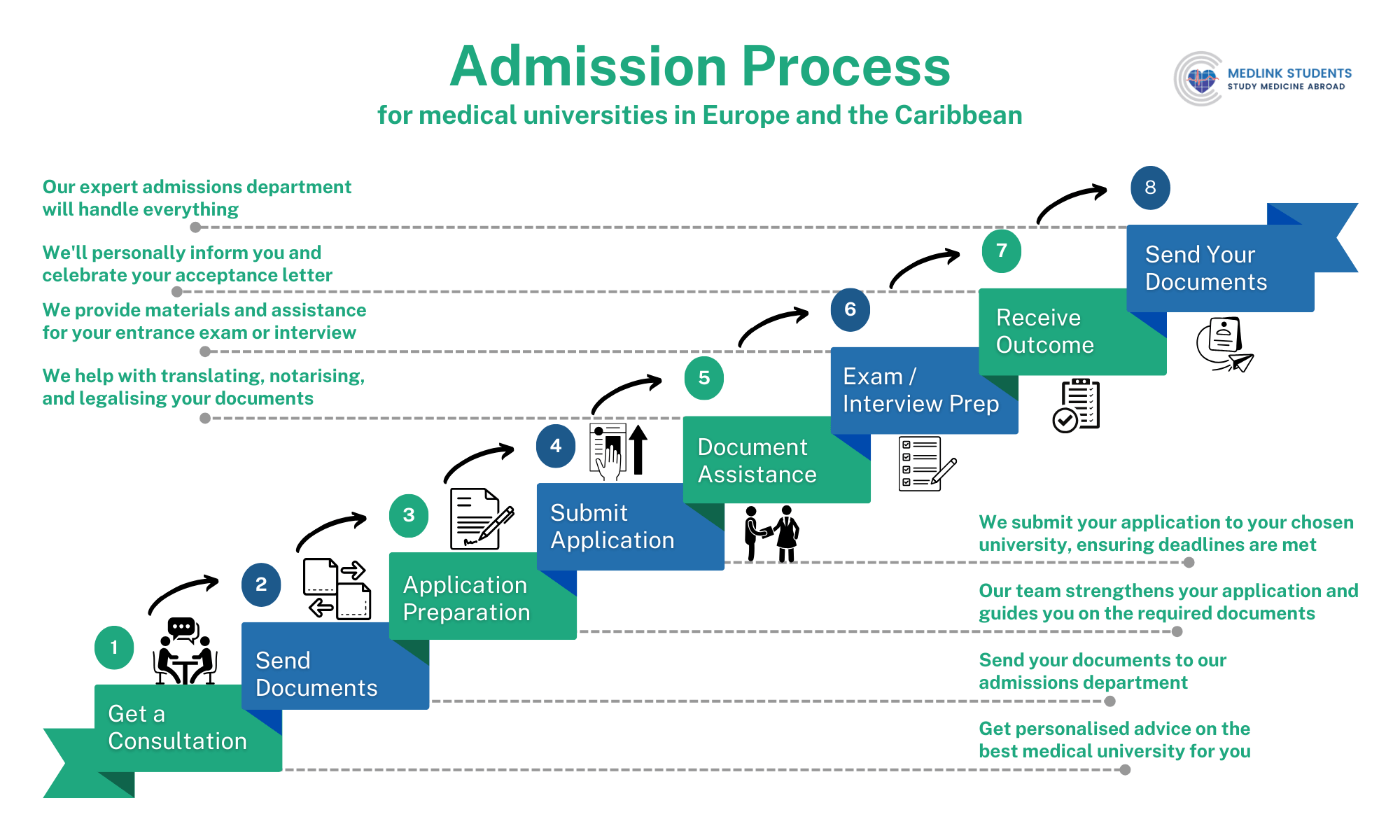
The admission process for Medicine in English at Lucian Blaga University of Sibiu is highly competitive. Other than preparing for the exam and interview, applicants must ensure that all academic documents are correctly translated and that their diplomas are officially recognised by the CNRED. This is exactly why Medlink Students offers its expertise. We'll handle the whole process for you and guarantee perfect document submission, allowing you to focus completely on achieving the required grades or preparing for your exam and interview (while offering you the resources you need) without the stress of applying to a foreign university alone.
Both medicine and dentistry programmes in English are currently under provisional authorisation. The latter is a temporary status given to a new medical programme that has proven sufficient resources to meet established educational standards for medicine.
The University of Lucian Blaga delivers a 6-year Medicine programme in English. The first 2 years focus on essential Basic Sciences (such as Anatomy, Physiology, and Biochemistry). Meanwhile, the next 4 years shift into Clinical Studies across medical and surgical specialities.
Students participate in Annual Speciality Internships and are integrated into on-call duty training during core clinical rotations. This usually takes place at the university's main affiliated Sibiu County Emergency Clinical Hospital. Finally, your 6th year wraps up with the writing of your doctoral graduation thesis.
ULBS offers a 6-year programme in Dentistry, taught entirely in English. The initial stage lays a foundation in core Basic Medical Sciences (such as Anatomy and Physiology), which is integrated with essential dental-specific knowledge, including the Morphology of teeth and dental arches.
The later years of the programme are focused on practical application, covering topics like endodontics, orthodontics, maxillofacial surgery, oral Restoration. Speciality medical practice (internships) are also mandatory and scheduled during the summer break. These are done in years 2, 4, and 5 of the plan of study, each consisting of 160 hours.
Research initiatives are a major part of ULBS. Focus areas include:
While the ULBS offers a medical programme that will put you on the path to becoming a doctor, it's important to consider all your options before making an informed decision.
Here's a comparison between ULBS and Titu Maiorescu University, a top choice for students pursuing medicine in Romania:
| Lucian Blaga University of Sibiu | Titu Maiorescu University | |
| Location | Sibiu is a historical city and a former European capital of culture | Bucharest is Romania's capital, which is its largest and most student-friendly city. |
| International Recognition | Medicine in English is under provisional authorisation, as it has not yet graduated its first class | The degree is internationally recognised. The university meets the GMC's criteria for acceptance. Its medical degree is also recognised in Canada and is eligible for ECFMG certification in the U.S |
| International Opportunities | Erasmus+ study and clinical practice exchange opportunities | Erasmus+ opportunities as well as joint programmes with medical establishments in Paris, Vienna, Innsbruck, and Tel Aviv |
| Student Life & Support | Offers highly subsidised student dormitories. City provides a safe, welcoming, and historical environment | Offers a modern campus experience with 2 fully-equipped student dormitories, as well as city access to museums, parks, an old town district, cathedrals, gardens, shopping malls, clubs, and much more |
| Application Process | Ranked on a Biology/Chemistry interview, as well as a high school baccalaureate average grades | Based on high school grades (Bio/Chem) and an interview in Science and English. |
The University of Sibiu manages several student dormitories, offering accommodation to over 1500 students at highly subsidised rates compared to private rent. Fees are based on the room type (single, double, or studio) and the student's status.
These monthly rates apply to students who pay tuition fees and are eligible for the fee-paying student accommodation rates:
These students generally have slightly different rates, particularly for single rooms:
Sibiu is a city with plenty of history. It was even named the European Capital of Culture in 2007.
Students here can enjoy festivals, museums, and historical sites. It is also a safe and pedestrian-friendly city centre with plenty of study spaces, cafes, and parks.
The average monthly cost of living in Sibiu for a student ranges between and . This depends on lifestyle and accommodation choices.


Yes, the Lucian Blaga University of Sibiu offers a 6-year medicine programme that is taught entirely in English, as well as a 6-year course in dentistry.
Tuition fees are for EU/EEA students and for non-EU students.
The dentistry tuition fees are set to for EU students and for non-EU students.
It is an English-language test and an interview covering Biology and Chemistry.
Required documents include a high school baccalaureate diploma and an English proficiency certificate (or taking the university's English language test).
The Medicine programme in English is currently under provisional authorisation, a temporary status given to a new medical programme that meets EU standards but hasn't graduated its first set of doctors yet.