




















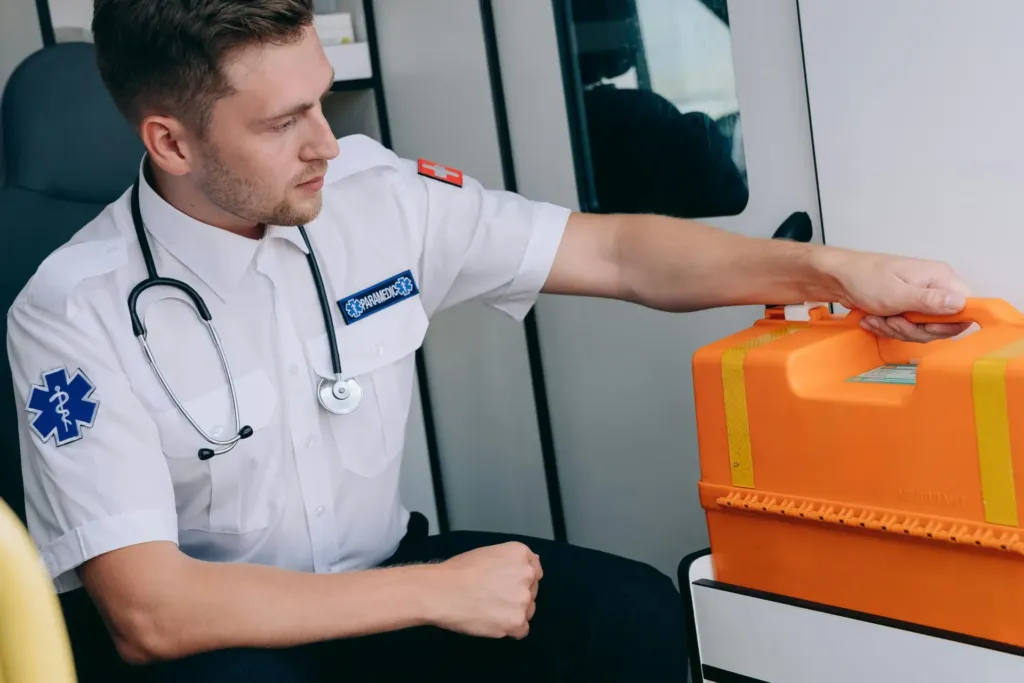
It's known that Paramedics and EMTs are the backbone of emergency care, especially in their ability to make split-second decisions on the road daily. However, managing acute cases in the back of an ambulance can eventually lead you to crave that deeper diagnostic authority and full clinical autonomy.
In this blog, we will discuss paramedic to medicine conversion coursework and how going from being a paramedic to a fully licensed physician is not as difficult as it may seem
Can a Paramedic Become a Medical Doctor?
The answer to can a paramedic become a medical doctor is 100% yes. Medical schools actively seek candidates with your background because you already possess skills that cannot be taught in a lecture hall. You have real-world experience managing acute trauma, handling high-stress patient interactions, and performing under pressure.
Let's be honest, while traditional medical students struggle with their very first clinical placements, you are already comfortable taking patient histories and performing physical assessments. Shifting to medicine simply allows you to combine your pre-hospital diagnostic instincts with advanced clinical therapeutics and surgical training.
How European Medical Schools Value Emergency Care Experience
European medical schools place immense value on hands-on emergency experience. Traditional routes in the UK are bottlenecked by requiring competitive exams like the UCAT, and many capable emergency workers get stuck on waiting lists.
European universities offer an accessible alternative which 100% evaluates your clinical background holistically. Your experience of responding to emergencies, assessing patients and providing immediate life-saving treatments is a major asset to them, allowing you to bypass and jump towards the 1st or 2nd year of your medical journey.
Ready to Switch from Paramedic to Doctor?
So really, if you’re ready to trade the sirens for the stethoscope, book a free consultation with our expert advisors today. We will handle every aspect of the transition for you so you can focus on clinical medicine.
Select a convenient date and time below to book your free academic consultation:
Understanding ECTS Credit Transfers for Paramedic Science Graduates
European universities will assess your prior transcripts and earned credits to grant you pre-clinical subject exemptions.
Understanding how medical school transfers and graduate entry courses work is essential when preparing for your transition. By showing that your prior pre-hospital courses cover equivalent scientific content, deans will essentially exempt you from repeating foundational 1st or even 2nd year courses. This makes graduate entry medicine for paramedics in Europe a very realistic option.
Top European Universities for Fast-Track Medical Entry
Here is a breakdown of the top European universities that accept credit transfers and can recognise your prior clinical learning:
University of Nicosia Medical School
Located in the capital of Cyprus, this top-tier university offers a specialised, and English taught 5 year graduate entry MD programme for science or health degree holders. Paramedics benefit from early clinical exposure and world-class simulation labs.
European University Tbilisi
For paramedics seeking a budget-friendly route with no entrance exams, this modern Georgian university is a top choice. It owns the Jo Ann University Hospital, allowing direct exposure to cardiology and surgery. Your transcripts are evaluated to grant advanced standing so you can begin clinical rotations sooner.
If you’re curious about what a paramedic to medicine conversion course or pathway is really like in Cyprus, Georgia or even other European Countries, you have to join us in our next live interactive webinar to chat with our advisors, learn about credit matching, and get all your questions answered on the spot.
Entry Criteria and Timelines for Pre-Hospital Professionals
To apply to graduate entry medicine for paramedics in Europe, you will need to submit your paramedic science diploma or degree certificate, your official academic transcripts showing the teaching hours completed, and a valid passport. There are no hyper-competitive standardised exams. Instead, universities evaluate your science grades and conduct an online conversational interview to assess your communication skills and clinical drive. This way, you can qualify as a doctor in just 4 to 5 years instead of the traditional 6.