









Bulgaria is becoming increasingly popular among international medical students because it offers affordable tuition, English-taught EU-recognised degrees, lower living costs, Schengen mobility, and strong post-graduation opportunities across Europe.
In this blog, we will discuss what makes Bulgaria an accessible pathway into European medical education, as well as the legal frameworks for visas, residency and employment.
Key Takeaways in this blog include:
- Non-EU students need a Bulgarian Type D visa and a yearly residence permit renewal
- International students can legally work up to 20 hours weekly during studies
- Bulgaria’s Schengen membership and EU-recognised medical degrees offer excellent career opportunities after graduation
Do Non-EU Students Need a Visa to Study Medicine in Bulgaria?
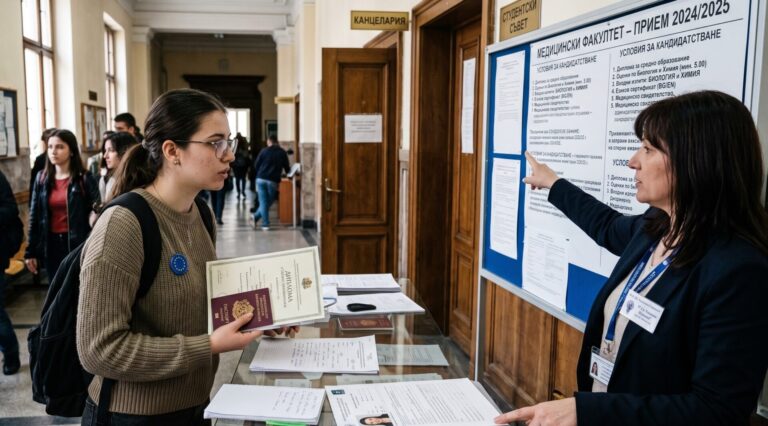
Of course you do. Non-EU students should apply for a Bulgarian Type D student visa before entering Bulgaria, which allows you to legally remain in the country for studies lasting longer than 90 days.
After arrival, you must then apply for a Bulgarian temporary residency permit for medical students through the Migration Directorate, which is renewed annually throughout your 6-year medical degree.
One really nice thing now is that ever since Bulgaria officially fully joined the Schengen Area in 2025, having a Bulgarian student visa opens the door to travelling around a lot of Europe way easier during your studies, which honestly makes student life feel less “stuck” in one country all the time.
What Documents Are Required for the Bulgarian Type D Visa?
The paperwork part is the least fun part of the whole process, as students still need to prepare, translate, legalise and organise all their documents properly before applying. Usually, this includes things like:
- University acceptance letter
- Legalised and notarised high school diploma and academic transcript, if required by the consulate
- Valid passport
- Medical certificate
- Proof of accommodation
- Health insurance valid within the EU, with cover of at least €30,000
- Criminal record check for Bulgarian D-visa application
- Proof of funds for Bulgarian student visa 2026 (sufficient means for the period of stay)
- Passport photos
- Completed visa application forms
You should also know that, to study medicine in Bulgaria, the student visa processing time from the UK/Non-EU can take 30-35 working days, and because document legalisation and embassy processing can take months, many universities recommend beginning preparations as early as April or May.
Want help sorting all these documents out? Sign up for a free consultation using the form below, and we’ll make sure everything is in order:
Can Non-EU Medical Students Work in Bulgaria?
Yes, under Bulgarian law, international students with a valid Bulgarian residence permit may work without a separate work permit for up to 20 hours per week during the academic year and during official holidays.
Common part-time jobs for English-speaking students in Sofia and other cities include:
- Hospitality and cafe work
- Customer support
- Academic tutoring
- Freelancing
- Remote online work
- Administrative roles in clinics or hospitals
English speaking opportunities are mainly concentrated in cities such as Sofia, Plovdiv, Varna, Burgas, Stara Zagora and Pleven with their average monthly living costs for students approximately being:
| City | University with Medicine in English | Estimated Monthly Living Costs |
| Sofia | Sofia Medical UniversityUniversity of Sofia St Kliment Ohridski | €750 - €1,100 |
| Plovdiv | Plovdiv Medical University | €650 - €900 |
| Varna | Varna Medical University | €700 - €950 |
| Burgas | Prof Dr Assen Zlatarov University Faculty of Medicine | €650 - €900 |
| Stara Zagora | Trakia University | €600 - €750 |
| Pleven | Pleven Medical University | €600 - €700 |
Check out the entry requirements for each of these universities here: Entry Requirements in Bulgaria
Can Non-EU Graduates Stay in Bulgaria After Graduation?
Yes. Current immigration regulations allow graduates to apply for a 9-month post-study residence period designed specifically for job searching and career transition. Graduates must also register with the Employment Agency within 7 business days after finishing their education.
Once employed, graduates can usually transition into:
- Single Residence and Work Permits
- EU Blue Card pathways for highly skilled professionals
- Other work-based residence routes, depending on the job and employer
Many graduates later pursue careers in countries such as the United Kingdom, Germany, Ireland and France, and are also accepted for pathways like the UKMLA in the UK and the USMLE in the United States.
Don't let complex immigration paperwork stall your medical ambitions. Join our exclusive free webinar to walk through the complete Type D visa checklist, analyse regional living costs, and master your absolute pathway into EU medical education.
Why We Care
Choosing the right country means understanding the full picture before applying, not after arriving. At Medlink Students, students receive guidance not only with university admissions, but also with visa preparation, relocation support, and long-term planning for studying medicine in Europe. Sign up for a free consultation with 1 of our academic advisors, and we’ll help you kickstart your medical education in Bulgaria.