ENQUIRE NOW




Enquire
Enquire now and get a FREE assessment of your documents and available options

Choose
We find you the perfect medical school to suit your needs & guarantee your entry

Support
On-ground support with help from medical students and doctors on campus

Practice
Our doctors will help you register in the UK or EU countries upon graduation


The United Kingdom is known as 1 of the world’s best destinations to study medicine, with several medical schools consistently placed among the top universities globally.
In the 2025 QS World University Rankings for Medicine, multiple UK universities, including Oxford, Cambridge, Imperial College London and University College London, were ranked in the global top 10 for medicine.
It takes 5 to 6 years of intense learning and training to get an MBBS in the UK (Bachelor of Medicine, Bachelor of Surgery).
You can expect your first 2 or 3 years of your medical degree to be mostly theoretical with some pre‑clinical training.
After this, the final 3 or 4 years of the MBBS degree in the UK are dedicated to developing hands-on clinical skills. At this point, you’ll start getting experience in hospitals and clinics to learn about diagnosing, treating, and interacting with patients across various medical specialities.
Some universities also offer UK graduate entry medicine programmes that take 4 years.
It is extremely competitive to study medicine in the UK.
According to the UCAS stats in 2025, around 23,350 applicants competed for roughly 8,500 medical school places across the UK. For the 2026 application cycle, there were 25,770 applicants fighting for 8,126 places in England and a few hundred more spots in Scotland, Northern Ireland and Wales.
This means that on average, only 1 in 3 candidates gets accepted to study medicine in the UK.
Competition is even fiercer for international applicants, as there are only about 500 international places available, but 5,000+ international applications, meaning barely 10% of students can get a spot.
The average medical school acceptance rates in the UK are around 10.5% for the top universities, with some as low as under 9% at Oxford University and around 9.9% at Imperial College London. Wider UK medical school acceptance rates range between about 12% to 55%, depending on the medical school, applicant pools and quota limits.
For specific entry requirements for UK medical schools in 2026 you can visit the Medical School Council’s page on UK Medical School entry requirements.
Grades-wise, UK medical school entry requirements are:
It’s also important to note that good grades alone aren’t enough.
Medical universities in the UK look for students with good scores on the UCAT, demonstrable passion for healthcare, excellence across a range of medicine-related skills, and preferably, some work experience.
From 2025 onwards, all medical schools in the United Kingdom will require you to take the UCAT. The BMAT (Biomedical Admissions Test) has been discontinued in the UK.
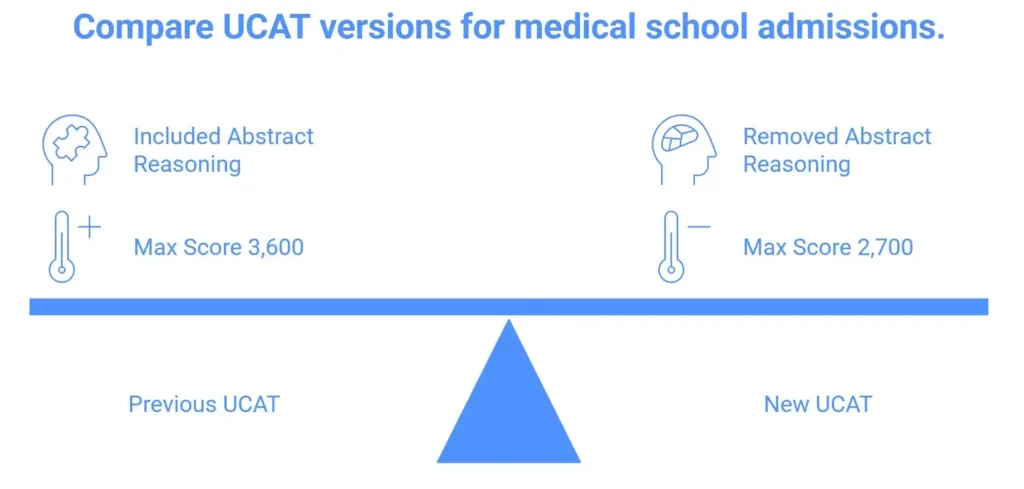
The UCAT itself was also updated in 2025, and the Abstract Reasoning subtest was removed entirely. Now the test includes Verbal Reasoning, Decision Making, Quantitative Reasoning (all of which are scored 300-900), and Situational Judgement (Bands 1-4). This makes the new maximum UCAT score to be 2,700, down from the previous 3,600.
The mean UCAT score in 2025 for UK medical schools was 1,891 out of 2,700 with the top 10% of scorers getting an average of 2,220. The top 30% scored an average of 2,010. This means that if the trend follows and only 1 in 3 candidates get accepted, then students should aim to score at least 2,010 on the UCAT to remain competitive.
The lowest minimum UCAT requirement is a score of at least 1,650 at the University of Edinburgh, with a minimum of Band 3 for Situational Judgement.
The personal statement is another crucial part of applying to study medicine in Britain. Admissions officers use your personal statement to assess your motivation, character, and suitability for a demanding medical degree.
Medical schools are looking for students who can demonstrate both passion and commitment to medicine. They want to be sure that you’ll go through the entire course without dropping out and go on to become a valuable part of the UK National Health Service.
Our tips for UCAS personal statements are to be genuine about your passion for medicine, highlight important skills like teamwork and communication, and include any relevant experience to show how it has prepared you for a career in medicine.
After your personal statement is reviewed, if short-listed, you will be invited to attend an interview. There are 2 types of interviews you’ll need to prepare for if you want to study MBBS in Britain:
Nearly all UK medical schools use interviews, so make sure to check which type you need to prepare for when you apply for an MBBS in the UK.
While not a formal requirement, many UK medical schools highly value and recommend having 3 to 6 months of relevant work experience. This can be volunteering, shadowing doctors, or working in healthcare settings.
Having been in a clinical environment ties in especially well with both your personal statement and interview, as you can use your experience to demonstrate the skills you’ve acquired and your commitment to the profession.
International students who want to study medicine in Britain (except Irish citizens) must apply for a UK Student visa and provide evidence that they have sufficient funds to cover tuition fees and living expenses for the duration of their studies.
If English is not your first language, you must also meet the medical school’s English language requirements, usually through IELTS, TOEFL, Cambridge or an equivalent test.
Some of the lowest entry requirements in 2026 for medicine in the UK are for the 4.5-year MB ChB undergraduate degree at the University of Buckingham. They ask for:
The deadline for applying to UK medical schools is in mid‑October of the year before entry. All applications must be submitted through UCAS.
Studying medicine in the UK can be very expensive, especially if you are an international student.
MBBS in the UK tuition fees cost between £9,250 and £9,790 per year for home students.
The MBBS fees in the UK for international students are between £30,000 and £50,000 annually, depending on the university.
Living costs for students in the UK are between £850 and £1,500 per month for essentials such as accommodation, food, utilities, travel and study materials. This means you can expect to spend from £10,000 up to £18,000 per year on average.
Costs tend to be higher in London (about £1,300 - £1,600+ per month) and lower in most other UK cities and towns. Smaller cities such as Nottingham and Cardiff generally offer more affordable living expenses in the range between £850 and £1,300 monthly.
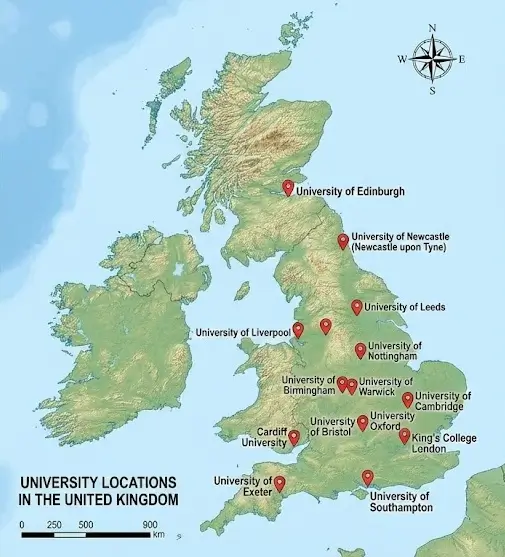
The best medical schools in the UK include:
| Medical School | Medical Places (total) |
| England | |
| Anglia Ruskin University | 128 |
| Aston University | 110 |
| University of Birmingham | 408 |
| Brighton & Sussex Medical School | 207 |
| University of Bristol | 287 |
| Brunel University London | 53 |
| University of Cambridge | 313 |
| University of Central Lancashire | 56 |
| University of Chester | 55 |
| University of East Anglia | 235 |
| Edge Hill University | 63 |
| University of Exeter | 228 |
| Hull York Medical School | 239 |
| Imperial College London | 295 |
| Pears Cumbria School of Medicine (Imperial/Cumbria) | 58 |
| Keele University | 171 |
| Kent & Canterbury Christ Church (KMMS) | 109 |
| King’s College London | 376 |
| King’s College London: Portsmouth Medical School | 67 |
| Lancaster University | 134 |
| University of Leeds | 294 |
| University of Leicester | 293 |
| Lincoln Medical School (Nottingham/Lincoln) | 84 |
| University of Liverpool | 345 |
| University of Manchester | 401 |
| Newcastle University | 369 |
| University of Nottingham | 375 |
| University of Oxford | 200 |
| University of Plymouth | 173 |
| Queen Mary, University of London | 374 |
| St George’s, University of London | 280 |
| University of Sheffield | 315 |
| University of Southampton | 278 |
| University of Sunderland | 117 |
| University College London | 337 |
| University of Warwick | 203 |
| University of Worcester | 62 |
| Total (England) | 8,126 |
| Scotland | |
| University of Aberdeen | 200 |
| University of Dundee | 180 |
| University of Edinburgh | 245 |
| University of Glasgow | 269 |
| University of St Andrews | 90 |
| Total (Scotland) | 984 |
| Wales | |
| Cardiff University School of Medicine | 270 - 295 |
| Swansea University Medical School | 142 |
| North Wales Medical School (Bangor) | 140 |
| Total for Wales | 552 - 577 |
| Northern Ireland | |
| Queen’s University Belfast | 236 |
Graduate Entry Medicine (GEM), also called postgraduate medicine in the UK, is designed for students who already hold an undergraduate degree and wish to pursue a career in medicine. Most universities require a degree in a science subject, though some accept degrees in humanities or social sciences, provided you have the necessary scientific background.
UK Medical graduate entry programmes take 4 years.
UK GEM applications are even more competitive than the standard route, as the seats are very limited.
You will need a very strong academic record, a strong personal statement, great performance on the interview and work experience to have a chance of getting accepted.
As with standard medical entry, GEM applicants are required to take the UCAT.
Most universities require a 2:1 or higher in your undergraduate degree, along with A*AA to AAB in your A-Levels with Chemistry and Biology and either Mathematics or Physics.
Note that some universities may accept a 2:2 if you have extensive work experience or a particularly high UCAT score.
UCAT-wise, you should aim to be in the top 10% of scorers, so getting 2,210 should be your goal.
Graduate entry medicine in England and Scotland costs the same government‑regulated rate as undergraduate medicine, which is between £9,250 to £9,790 per year for home students and from £30,000 to £50,000+ per year for international students.
Here’s the list of UK universities offering graduate entry medicine:

There’s no way to sugarcoat it, medical school in the UK is intense.
Be ready for heavy workloads, practical training and clinical rotations. It’s not uncommon for students to experience stress, but universities offer various well-being and mental health resources to help students maintain their mental health.
UK medical universities also often have active medical societies and clubs that host social events and networking opportunities to help students unwind and connect with one another. Many students also join volunteer programmes or take part in extracurricular activities for extra experience in healthcare.
A core part of getting a medical degree in the UK is your time spent in the NHS (National Health Service).
You will take part in clinical placements that give you real-world experience by working directly with patients in hospitals, clinics, and GP surgeries. As you progress through medical school, your placements will become more hands-on, with opportunities to rotate through specialities.
The goal is to not only gain the necessary skills to become a successful doctor, but also to familiarise yourself with the NHS, which you will, ideally, be joining after graduation.
These are the steps to actually becoming a doctor after getting your UK medical degree:
After completing your medical degree, you’ll need to register with the General Medical Council (GMC) to legally practice medicine in the UK.
The GMC is the regulatory body for doctors in the UK, and upon successful completion of your degree, you are eligible for a provisional registration.
As of 2026, all medical students are required to pass the MLA, a standardised national licensing exam.
The MLA consists of 2 parts:
The MLA can be taken before or during your Foundation Year 1 (FY1) training.
After you’ve completed your degree and passed the MLA, you’ll enter the Foundation Year 1 (FY1) stage, part of your Foundation Training. During F1, you’ll rotate through different clinical placements, gaining hands-on experience in various medical specialities.
After passing FY1, you become eligible for full registration with the GMC, allowing you to work unsupervised as a doctor.
In Foundation Year 2 (FY2), you will take on more responsibility in a broader range of clinical settings, and you can begin specialising in areas that interest you.
After completing your Foundation Training, you will be able to choose your career path within the NHS. The UK offers a wide range of specialities to pursue, including surgery, general practice, paediatrics, psychiatry, emergency medicine, and many more.
Your career progression will involve completing specialised training under NHS contracts in your chosen field, which can take anywhere from 3 to 8 years.
While studying medicine in the UK is a very popular choice, there simply aren’t enough spaces in the UK medical system for a large portion of the cohort.
Thankfully, it’s not the only path to becoming a doctor for UK students, and there are other equally prestigious destinations to study medicine.
An increasing number of medical students are turning to international options as an excellent alternative to receive high-quality education, often at a fraction of the cost.
Many European medical schools are renowned for offering high-quality, accredited and internationally recognised medical education in English.
The top universities in Europe have a comprehensive curriculum that is on par with UK medical education and meets international standards. Many European medicine programmes are recognised by global medical boards, including the GMC, which allows graduates to practise medicine in many countries across the world.

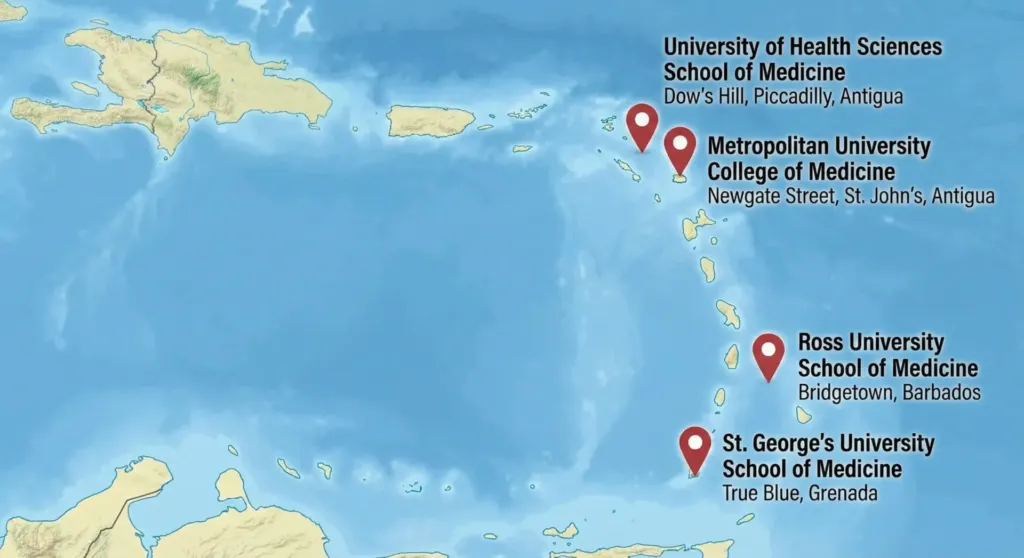
The Caribbean is an excellent choice for students looking for 4-year graduate entry pathways into medicine. The accredited Caribbean medical schools typically follow the US medical system to provide high-quality medical education.
Some medical schools even offer clinical rotations in the UK.
Unsure of where to start your medical studies?
Medlink Students is here to help you explore your options and provide clear, actionable advice to help you make informed decisions about your medical education. We offer expert guidance on studying medicine and have a proven track record on helping students find the best route that suits their goals, ambitions, and circumstances. Sign up for a free consultation with our certified academic advisors to get personalised advice on choosing YOUR best pathway to becoming a doctor.
All applications to UK medical schools must be submitted through UCAS by the annual deadline in mid‑October of the year before entry. Late applications are not accepted.
UK medical schools require A*AA to AAB at A-Level, with Chemistry and Biology. Some schools also ask for a 3rd subject, usually Mathematics or Physics.
Yes, medical schools typically require at least 5 GCSEs at grade 7 or higher, including English, Mathematics, and Science.
For the International Baccalaureate (IB), the typical entry requirement is around 36 to 38 points, with high marks (at least 6-7) in Chemistry and Biology.
Graduate Entry Medicine (GEM) in the UK requires a 2:1 or higher in your undergraduate degree, which should ideally be in a science subject. Some universities may accept degrees in humanities or social sciences, but you will need a strong science background. A-level requirements are the same as the traditional route.
Yes, all UK medical schools require the University Clinical Aptitude Test (UCAT) as part of the admissions process. You should sit your UCAT before submitting your UCAS application, usually in the summer months before application.
A UCAT result is valid for 1 application cycle only. If you defer or reapply the following year, you must retake the test.
You may take UCAT only once per application cycle. You cannot resit within the same year if you score low.
The top 30% of students in 2025 had achieved a mean score of 2,010, while the top 10% got an average of 2,210 points. If you want to remain competitive, you should aim for a score of over 2,010.
In 2026, there were 8,126 spots for medicine in England and a few hundred more across Scotland, Wales and Northern Ireland.
Work experience is not a strict requirement, but having 3-6 months of experience is very beneficial and often expected in personal statements and interviews.
UK medical schools commonly use either traditional panel interviews or Multiple Mini Interviews (MMIs).
Write genuinely about your motivation for medicine, your relevant experiences, what you’ve learned about healthcare and your key skills (teamwork, empathy, communication).
Yes, international students usually must also have:
You can include up to 4 medical courses in your UCAS choices, with 1 additional non‑medicine choice if you want.
Yes, you can resit your A-levels, but this means waiting an entire year. Some students opt to start their medical education abroad instead of taking a gap year.





Receive exclusive medical school admission guides, tips from doctors, and university updates direct to your inbox.
You’re on the list!
Thanks for subscribing. Keep an eye on your inbox for our next update.


2027 Entry Free Consultation No Obligations