


























If you’re thinking about medical school, chances are the MCAT already feels like a gatekeeper standing between you and becoming a doctor. For many students, it’s stressful, expensive, and often repeated more than once.
What most don’t realise, however, is that the MCAT is not the only route into medicine. In this blog, we break down what the MCAT actually is, who needs to take it, and what realistic, accredited alternatives exist if you don’t want, or don’t need, to go through it.
TL;DR
The MCAT is only essential if you’re set on studying medicine in the US or Canada. If not, there is an abundance of accredited medical schools abroad where you can study medicine without it.
Key Takeaways in this blog include:
- The MCAT is a demanding exam mainly required for US and Canadian medical schools
- A low MCAT score limits US options, but does not end your path to medicine
- Many European and Caribbean medical universities accept students with no MCAT at all, and offer graduate entry paths for pre-med students
- Choosing the right pathway early can save years, money, and unnecessary stress
Table of Contents
What is the MCAT Exam?
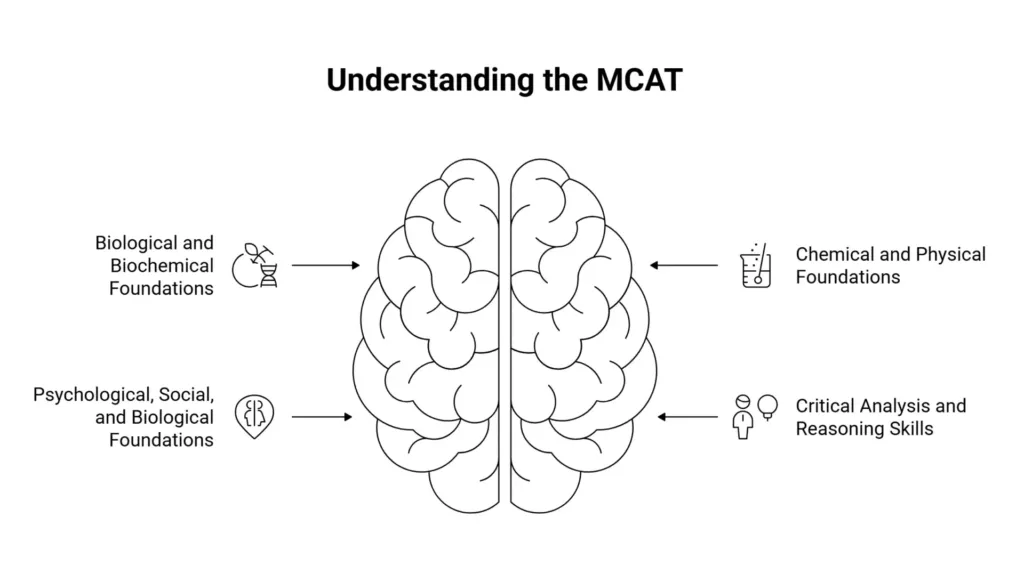
The Medical College Admission Test (MCAT) is a multiple-choice and computer-based exam required for admission to most US and Canadian-based medical schools, as well as some international schools. In total, more than 85,000 students sit for the exam each year.
It assesses and tests you on 4 main components:
1- Biological and Biochemical Foundations of Living Systems
2- Chemical and Physical Foundations of Biological Systems
3- Psychological, Social, and Biological Foundations of Behaviour
4- Critical Analysis and Reasoning Skills
It is administered multiple times throughout the year by the AAMC in hundreds of test sites throughout the US, Canada, and select international locations.
The 2026 MCAT exam dates can be found on the official AAMC site here: US MCAT Calendar & Schedule.
What happens if you fail the MCAT?
If you get a low score on the MCAT, there are 2 options: reapply or apply to a medical school that doesn’t require the MCAT.
If you’re set on studying in the US or Canada, you can simply retake the MCAT that same year or the year after. Many students do this, especially if they feel their score doesn’t reflect their real academic level.
Just keep in mind that preparing again takes time, money, and commitment. Medical schools will also see your previous scores, although they often focus more on your highest result.
And as mentioned, the 2nd option is to apply to medical universities abroad that do not require the MCAT at all.
If you’re planning on starting medical school this year, we’ve made this blog specifically to help out prospective students like you: What to Expect Out of Medical School Admissions in 2026.
Tired of Stressing Over the MCAT? You Have Options.
Don't let a single test delay your dream of becoming a doctor. Get a free, personalised consultation with our expert academic advisors to discover accredited medical schools abroad where you can apply today—no MCAT required.
Do you need the MCAT to go into medical school?
The short answer is that no, you really don’t, unless you’re 100% sure that you’ve made the choice to study in the US, then it will be essential. Very essential. In fact, some students have to do it more than once to score high enough to get into medical school in the US.
In reality, many top-tier medical universities in Europe, as well as the Caribbean, offer excellent medical programmes, into which you can get accepted with no MCAT at all.
These medical universities will still require an interview, as well as proof of English proficiency (i.e. IELTS), and sometimes, but not always, a biology-chemistry entrance exam. In case you’ve already gone through a premed programme, you will be able to go through 4-year graduate entry paths.
These universities are based in countries such as Georgia, Latvia, the Czech Republic, Serbia, Croatia, and more.
European medical universities with graduate entry medicine include, but are not limited to:
- European University in Georgia
- Pavol Jozef Safarik University in Slovakia
- University of Nicosia in Cyprus
- Medical University of Silesia in Poland
Exceptional Caribbean grad entry/accelerated medical degree options include:
- University of Health Sciences School of Medicine (UHSA) in Antigua & Barbuda
- Ross University School Of Medicine (RUSM) in Barbados
- St. George's University School of Medicine (SGU) in Grenada
You’re not only getting a complete medical education and internationally recognised degree there, but you could also be saving on living costs and tuition fees (as low as €5,000 per year in some places).
These are only a few options out of many, however, and finding what suits you best has been an overwhelming task for many of the students that we’ve worked with. It’s best you schedule a free consultation with 1 of our expert advisors, and we’ll take care of finding you the best university for your needs.
Why We Care
Unfortunately, many students waste years retaking the MCAT exam or applying blindly to universities that may not even suit them. This often means extra financial pressure, delayed graduation, and losing time that could have already been spent studying medicine and building your clinical experience.At Medlink Students, we help match you with accredited & internationally recognised medical universities that fit your career goals. Book a free consultation with 1 of our advisors, and you’ll get clear guidance, full application support, and a direct plan that helps you start your medical journey faster and with more confidence.
FAQ
What is MCAT?
The MCAT is a standardised exam required mainly for medical schools in the US and Canada. It tests science knowledge, reasoning skills, and critical thinking.
How Hard is the MCAT?
You can look at the MCAT as a really wide ocean that’s a few feet deep. Content is relatively surface level, and what makes it very hard is that it requires you to basically recall and recognise just about everything science under time pressure. So yes, pretty hard.
What is a Low MCAT Score?
A low MCAT score is generally anything below 500-502, which places an applicant below the 50th percentile, making admission to US-based medical schools extremely difficult.
I Failed my MCAT, What Now?
You can either retake the MCAT if you believe you can improve or choose a medical school that doesn’t require it. Many students take the second option to avoid losing more time and money.
What are the Medical Schools That Take Low MCAT scores or no MCAT at All?
Many accredited medical universities in Europe and the Caribbean do not require the MCAT. These include European University, University of Zagreb, Pavol Jozef Safarik University, ASOMI College of Sciences in Malta, University of Novi Sad and the Medical University of Bialystok.