













Most students need to pick their careers very early - sometimes too early. And while many are quite confident in their first choice, some have second doubts, even years into their education. Maybe you just don’t have much passion for what you’re studying. Perhaps a new opportunity presented itself that you hadn’t considered before. Or maybe you just need a decent change of pace - no reason is too big or too small when it comes to choosing the career you will, presumably, be working on for the rest of your life.
Luckily, some education paths are easier to swap to and from than others. We’re happy to tell you that if you’ve been considering a biomedical science to medicine transfer, there are definitely options that can allow you to pursue the career of your dreams!
We’re here to answer all your questions about how to transfer from biomedical science to Medicine!
Table of Contents
- 1 What is Biomedical Science?
- 2 What is the situation?
- 3 Can you transfer from biomedical science to Medicine?
- 4 Can I work in the UK after transferring from biomedical to Medicine?
- 5 Can I go to medical school with a biomedical science degree?
- 6 Our Webinar Awaits You
- 7 Universities that allow transfer from Biomedical Science to Medicine in Europe
- 8 How we can help you with biomedical science to medicine transfer
- 9 Why This Matters for You
- 10 FAQ
- 10.1 Can I Become A Doctor With A Biomedical Science Degree?
- 10.2 How Do I Transfer Into Medical Universities In Europe?
- 10.3 Which Universities Allow Biomedical Science To Medicine Transfers?
- 10.4 Is Biomedical Science Undergraduate Degree A Good Route To Study Medicine?
- 10.5 What Should I Include In Biomedical Science Transfer To Medicine Personal Statement?
What is Biomedical Science?
Biomedical science, or biomedicine, is a broad area of knowledge covering any scientific study of Biology and Chemistry concerning health care. The two terms are interchangeable and largely depend on how each university wants to present its programme to students.
An undergraduate course in biomedicine includes a wide range of disciplines, making it an excellent alternative for individuals who aren't sure where they want to focus their studies.
The curriculum for a biomedical degree includes subjects such as:
- Human anatomy and physiology
- Biochemistry
- Microbiology
- Genetics
- Pharmacology
- Bioengineering
What is the situation?
Sooner or later, some biomedical science students realise that this may not be the correct path and that they dream of becoming medical doctors and dentists. We have some good news for them - yes, BsC (biomedical science to medicine) students can become doctors.
Here at Medlink Students, we wish to help any medical student who may not be happy with their career choice, and we seek to provide them with their best options to study Medicine in Europe.
Some applicants decide to complete their biomedical degrees and then become eligible to study graduate medicine in Europe. This accelerated course allows them to complete Medicine in 4 or 5 years and kick-starts their medical career immediately after graduation.
Others don’t see merit in finishing their degree and directly opt to transfer to Medicine in Europe. While this reduces your chance of finding a job in the biomedical science field, it will get you your medical degree faster, so it’s a good option for those who are 100% certain they prefer Medicine to science.
Can you transfer from biomedical science to Medicine?
Yes, you can.
Don't start over. Find out how many of your Biomedical credits will transfer to Medicine today:
In fact, transferring from biomedical science to Medicine is much more straightforward than transferring from most other programmes into Medicine. The early years of biomedical science and Medicine cover many of the same subjects, so chances are that if you decide to transfer after your first or second year, you may not need to take many additional classes to catch up with the medical students.
You probably know how hard it is to get accepted into medical schools in some countries, like the UK, the USA, and Canada. Of course, there is always the option to go to a university in Europe or in the Caribbean. Universities like the ones in Georgia or University of Health Sciences School of Medicine in Antigua & Barbuda in the Caribbean are amazing options which open tons of opportunities for a lot of students each year. As a plan B, some students end up opting for biomedical science, either intending to complete it and get a different job in the medical field or to transfer into Medicine down the line. It’s a very solid plan, but it often fails to consider that transfers are only possible if the university has open slots.
Мany medical schools in Europe allow transfer from biomedical science to Medicine. The students who pursue their dream medical education can be exempted from the subjects they’ve already sat an exam for.
What’s more, you can directly apply for the same year you are currently in! For example, you’ve just finished your 2nd year of a biomedical degree, so you can enrol to start in year 3 of medical school. This way, you will not extend the duration of your medical education and can start treating people as a doctor as soon as possible.
You don’t lose anything. The effort you’ve put into your previous degree is accounted for. You are simply changing from one degree to the other.
Can I work in the UK after transferring from biomedical to Medicine?
Unfortunately not. The GMC requires students to go through a full course in Medicine to be able to register to work in the UK.
However, a viable option is to finish your biomedical degree and sign up for a graduate entry path into Medicine in the Caribbean. Thanks to your previous qualifications, you will be able to skip the first year of premed and go directly into the 4-year Medicine course.
After graduating, you will be able to register with the GMC and carry out your clinical residency training in the UK.
Can I go to medical school with a biomedical science degree?
Yes, you can change your career path from biomedical science to Medicine.
You can apply for graduate entry medicine or a dentistry programme. It allows healthcare professionals and biomedical science graduates like yourself to obtain an MD degree quickly. The duration of traditional medical education is 6 years, but you can get your master’s degree in 4 or 5 years as a graduate entry student.
To study Medicine after biomedical science in Europe, you must present a transcript of your previous higher education studies. Your subjects, study hours, and credits will be evaluated and used to exempt you from the subjects you studied before.
As a result, the university will allow you to shorten your programme by decreasing the subjects you need to complete your degree.
Our Webinar Awaits You
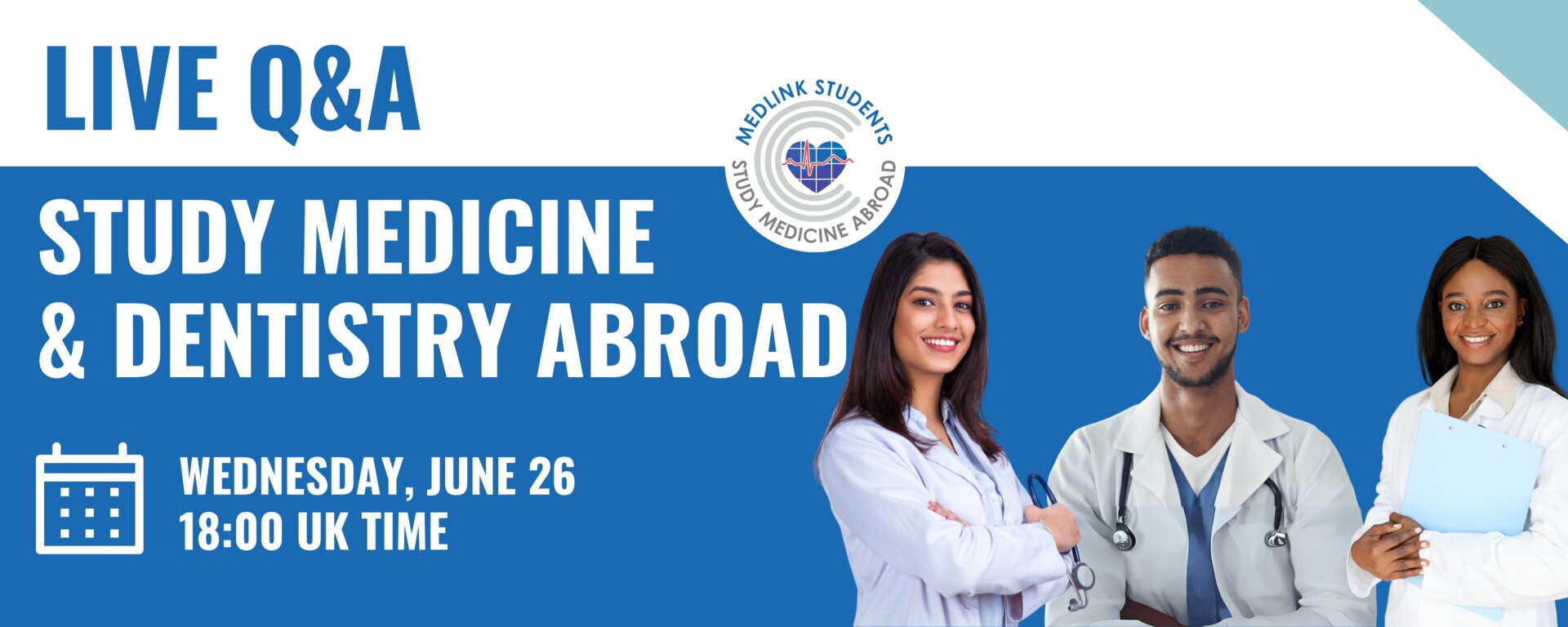
Are you a student who's struggling with the decision of choosing the right career path? It's not uncommon to face doubts, even years into your education. Whether you're lacking passion in your current field of study or a new opportunity has sparked your interest, many face the same dilemma. It's essential to find the career path that aligns with your passions and aspirations.
We understand that selecting the right career is a crucial decision that can shape your life's trajectory. That's why we're thrilled to invite you to our exclusive webinar designed to address the challenges faced by medical students like you in choosing their careers early on and how you can make a successful transfer from biomedical science to Medicine, where you can discover new horizons in your career journey.
Reserve Your Spot for Our Webinar to Learn More About Your Options to Transfer from Biomedical Science to Medicine
Universities that allow transfer from Biomedical Science to Medicine in Europe
We work closely with some of the best medical universities in Europe, and here is a shortlist of the schools where you can apply for biomedical science to medicine transfer or start your journey from BioMed to Medicine.
Universities that allow transfer from Biomedical Science to Medicine:
- Petre Shotadze Tbilisi Medical Academy (TMA) - Georgia
- European University In Tbilisi - Georgia
- Silesia University of Medicine - Poland
- Medical University of Lodz - Poland
- The University of Medicine and Social Sciences in Kharkiv - Ukraine
All universities we work with are listed in the World Directory of Medical Schools, a list that is managed by the World Health Organisation (WHO) and includes only accredited universities.
In addition, we have the largest database of English-taught medical schools in Europe. We have hand-picked the 100+ best medical universities in Europe so you can research and learn more about specialities, courses, different tuition fees, living costs, and much more.
How we can help you with biomedical science to medicine transfer
So, to the question, "Can I become a doctor with a biomedical science degree?" - the answer is short and clear: yes, absolutely.
We’ve helped thousands of students transfer between universities, many of which from biomedical science to a medical programme. Whether they’ve just completed their first year or are in their final year, we’ve never failed to help out a student who wishes to transfer.
If you’re interested in switching to a medical programme in Europe, you can always request a free consultation with our experienced student advisors. They’re going to evaluate your documents and experience and, in turn, give you personalised advice based on your preferences for countries, universities, tuition fees, accreditation, and living costs.
Don’t let anyone tell you that a transfer from biomedical science to Medicine isn’t possible! Follow your heart—we'll make it happen if you want to.
Why This Matters for You
Transferring from biomedical science to medicine is a natural and popular option that has opened new opportunities for students across the world. Here are the top factors that you should take into account before making this decision:
Smooth transition: Transferring from biomedical science to medicine is a viable option, which will allow you to pursue a fulfilling career path as a doctor.
Similar curriculum: The early years of biomedical science and medicine cover many of the same subjects. This means that you may be able to get some of your subjects recognised, so you don’t have to go through them a 2nd time.
Global opportunities: Many European and Caribbean medical schools accept transfer students, which provides more opportunities for students to become successful doctors. This is especially helpful for students from countries with highly competitive medical school admissions, like the UK.
Graduate entry programmes: Graduates who have already completed their biomedical science degree can enrol in a 4-year graduate entry medicine programme. This pathway offers an accelerated and streamlined path to becoming a doctor, typically taking 4 to 5 years instead of the traditional 6.
GMC requirements: If you want to practise medicine in the UK, it is crucial that you understand the General Medical Council’s (GMC) prerequisites. Generally, graduate entry into medicine in the Caribbean provides a smoother pathway to becoming a doctor in the UK since some medical schools offer clinical residency training in the UK.
Support and guidance: Don’t forget that Medlink Students is available to give you professional advice and comprehensive support for applying to a graduate entry medicine course or facilitating your transfer process.
FAQ
Can I Become A Doctor With A Biomedical Science Degree?
Yes, a Biomedical Science degree is a recognised route into medicine. You can either transfer into an undergraduate medical programme or apply to graduate-entry medicine (accelerated 4–5 year courses for science graduates).
How Do I Transfer Into Medical Universities In Europe?
To transfer into medical schools in Europe you must identify universities that accept transfers, prepare official transcripts (ECTS/credits, syllabi), then apply by the uni’s transfer window and possibly sit internal tests or interviews. Universities may also require proof of language or extra catch-up credits.
Which Universities Allow Biomedical Science To Medicine Transfers?
Many universities in Europe allow transfers, and those include Petre Shotadze Tbilisi Medical Academy (TMA), European University In Tbilisi, Silesia University of Medicine, Medical University of Lodz, and the University of Medicine and Social Sciences in Kharkiv.
Is Biomedical Science Undergraduate Degree A Good Route To Study Medicine?
Yes, Biomedical Science is 1 of the best undergraduate foundations for medicine. It teaches core preclinical topics, strengthens your application for graduate entry, and gives you a fallback career if transfer isn’t possible.
What Should I Include In Biomedical Science Transfer To Medicine Personal Statement?
Your personal statement should clearly explain why you’re switching to medicine, evidence of clinical exposure, relevant biomedical coursework (anatomy, physiology, labs), research or lab experience, reflection on skills developed, and a short plan (transfer/graduate route you’re applying for). All of these show readiness for accelerated or clinical training.
Struggling to write your Biomedical Science to Medicine personal statement? Book a free consultation and our expert advisors at Medlink can review it and show you exactly how to highlight your strengths and ensure your admission to medical school.














I want to know if I could be offered an admission to study Medicine and Surgery at undergraduate level, considering that I already have a bachelor degree in Medical Laboratory Science (B.MLS), MSc in Biomedical Sciences and PhD in Medical Microbiology.
I am looking forward to hearing from you.