




















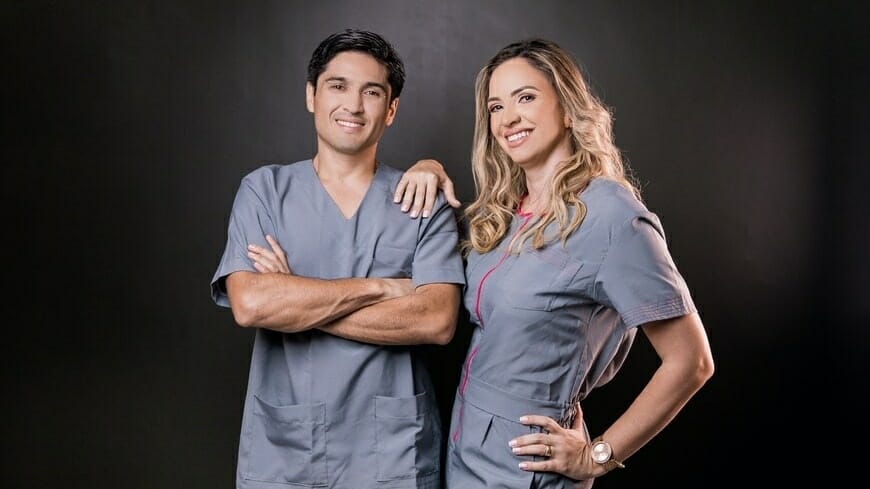
Nurses truly are the unsung heroes of the medical profession and the essential parts without which the entire medical system would fall apart within hours. Despite the ancient importance of nursing, it is often a stressful and ungrateful job, sometimes even more so than being a doctor. And while plenty of people are in love with nursing and can't imagine doing anything else, not everyone who signs up to study nursing wants to work as a nurse.
Sometimes, it's seen as a stepping stone so the student can study medicine after nursing, given the limited spots for doctors in medical universities.
Our experienced student advisors speak with current and future medical students literally every day, and many of them are nurses in training (or freshly graduated) who wish to become doctors. Some of the questions our advisors get all the time include the following:
- Can you study medicine after a nursing degree?
- Can a nurse become a doctor?
- Are nurses blocked from working as doctors?
- How can a nurse become a doctor?
If you've had questions like this, too, don't worry; we're here to answer all of them and set you on the path to getting your medical degree.
Table of Contents
- 1 Is it possible to study medicine after nursing?
- 2 Do you need to take an exam when applying for a graduate degree?
- 3 How to become a doctor after studying nursing?
- 4 Can a nurse become a doctor? UK pathway
- 5 What medical schools accept nurses: UK and beyond
- 6 Is it possible to transfer into medicine from nursing?
- 7 Nurse to doctor bridge programmes
- 8 Our Webinar Awaits You
- 9 The advantages of studying medicine in Europe after nursing
- 10 Why This Matters for You
- 11 What You Need to Know Before Transitioning From Being A Nurse To Doctor
- 12 What are the next steps?
- 13 FAQ - Medicine After Nursing
- 13.0.1 How long would it take for a nurse to become a doctor?
- 13.0.2 Can a nurse become a surgeon?
- 13.0.3 Can you transfer from nursing to medicine?
- 13.0.4 If I have a nursing degree, can I go to medical school?
- 13.0.5 Can I do MBBS after BSc Nursing in the UK?
- 13.0.6 Can you become a doctor with a nursing degree?
Is it possible to study medicine after nursing?
It is absolutely possible to study medicine after nursing, and moving from being a registered nurse to medical doctor is a common route. Many medical universities offer graduate entry programmes for healthcare workers who have already completed a nursing degree. This allows them to become full-fledged, practising doctors with both MD and nursing qualifications.
Of course, there are some limitations. Not every university offers graduate-entry courses, so it's possible that you won't be able to study medicine in the same place where you got your bachelor's in nursing.
However, it's important to note that the General Medical Council in the UK requires graduates to complete a full Medicine course before they can register for work in the UK. Basically, you won't be able to work in the UK if you have transferred from nursing to medicine.
Don't worry, though, there's a very pleasant alternative. You can complete your nursing degree and then enrol in a graduate entry medicine programme at the paradise-like destination of the Caribbean. With your prior qualifications, you will be able to skip the first year where you study premed and go straight to the 4-year Medicine programme.
After you finish this graduate entry course, you will be able to register with the GMC and complete your residency training in the United Kingdom.
Of course, you can also try to get a medical degree from scratch, but there's little point in that. The 1 or 2 years you save will be mostly theoretical and overlap with subjects you learned during your nursing studies. That's why the graduate course skips them: you gain very little from sitting in on the same subjects twice.
Do you need to take an exam when applying for a graduate degree?
Medical schools in the UK will often require you to take the UCAT or GAMSAT exams even if you already have a bachelor's degree in nursing. However, many medical schools in Europe will already recognise your degree and only require an interview to admit you.
Let's be honest here - no one wants to take exams all over again. You already qualified for your nursing degree and finished it, too. Why should you need to prove your knowledge moving from registered nurse to doctor when you already have the qualifications gained with it? Many medical schools throughout Europe agree with you, and aside from your bachelor's degree in nursing, you will only be required to request a short interview.
This online interview may include a few questions about science and medicine, but, for the most part, the interviewer will ask about you. As such, you can expect questions such as "Why did you decide to study medicine after nursing" "What do you expect out of being a doctor compared to being a nurse" and "Why do you feel you're better suited to be a doctor than a nurse?"
Not all questions will be about your nursing education. They will also likely ask about your motivation, problem-solving skills, achievements, and hobbies.
Fill in this form if you want a free consultation about your options to transfer from nursing to medicine:
How to become a doctor after studying nursing?
These are the steps you need to take to start your journey to becoming a doctor after obtaining your nursing degree:
Finish your degree
Before beginning your medical graduate degree, you must complete your nursing programme and obtain your bachelor's degree. This will prove to the university that you've already completed your pre-clinical studies and can be fast-tracked to the 4-year medical programme.
Prepare all documents
After graduation, you will need to start preparing the documents you will need to apply for a medical course. Many of those will be very similar to ones you've already used to apply to medical school for your nursing degree (such as a motivational letter).
Instead of exams or A-levels, however, this time, your bachelor's degree will be enough. If you're studying abroad, you'll also need a valid passport and all necessary travel documents (for example, vaccination certificates).
Choose your university
You must select the university you wish to study for your medical degree. It can be located in your home country or abroad; this depends on your preferences and needs. The most crucial factor is that the university of your choice must accept a graduate entry and offer a 4-year medical programme. If it's located outside your home country, you must also ensure this graduate course is available to international students and taught in English.
Send your documents
Once you've made your choice, you need to apply to your selected university in accordance with their specific requirements. Most often, this will require sending them your bachelor's degree and a motivational letter. Some universities may also request references from your nursing teachers. If the university is located abroad, you may need these documents translated and notarised, which you can do by yourself at a notary or through a student admissions agency.
Comply with any additional requirements
Before you get accepted into the university of your choice, they may provide you with a list of additional requirements you'll need to fulfil. Entrance exams for graduate programs are very rare, but interviews with the faculty are much more common. These additional requests depend on the university to which you've applied.
If you’re ready to start your nursing to medicine UK journey, reach out to Medlink Students for a free consultation today and let us guide you step by step.
Can a nurse become a doctor? UK pathway
So, can a nurse become a doctor in the UK? Absolutely. In the UK, many nurses move from clinical practice to medical school via graduate entry medicine. Yes, you’ll need to pass the UCAT or GAMSAT (Graduate Medical School Admissions Test) and attend interviews, but your nursing background gives you a strong clinical foundation that interviewers love. Here’s what the nursing to medicine UK route looks like.
How can a nurse become a doctor in the UK? Step-by-step guide
- Complete a nursing degree and register with the NMC.
- Sit the UCAT or GAMSAT standard for UK graduate medicine programmes.
- Draft a strong personal statement and try to answer: “Why transition from nurse to doctor in the UK?”
- Secure strong references from supervisors who can speak to your clinical competence.
- Prepare for interviews and highlight your previous experience in healthcare.
- Secure a graduate‑entry spot, complete your fast-track 4‑year medicine degree and register with the GMC.
What medical schools accept nurses: UK and beyond
Unfortunately, graduate entry medicine spots in the UK are even more limited than regular ones, with hundreds of graduates fighting for 1 spot.
However, there are plenty of high-quality options in Europe and the Caribbean that award internationally recognised medical degrees. The top medical schools that accept nurses for graduate entry medicine or transfers are:
- St. George's University School of Medicine (SGU) in Grenada
- Medical University of Silesia in Poland
- University of Nicosia Medical School in Cyprus
- University of Health Sciences School of Medicine (UHSA) in Antigua & Barbuda
- Ross University School Of Medicine (RUSM) in Barbados

Is it possible to transfer into medicine from nursing?
Yes, going from registered nurse to doctor is possible, but there is a catch. Not many universities allow a direct transfer from nursing to a medical programme. Those that do will often require you to undertake additional classes to make up for what you missed in your nursing course.
Switching from nursing to medicine seems like an excellent option for students who aren't big fans of waiting. And since many medical schools accept transfers, it can be considered a good way to get your medical degree while saving time.
Ultimately, everyone's needs are different; for many, it may be worth skipping that year and transferring, even if it means extra classes and fewer qualifications. When you book a consultation with our expert student advisors, they will consider your specific needs. The result will be a solution that's tailor-made just for you.
Nurse to doctor bridge programmes
Commonly called pre-med courses (or medicine foundation year), bridging courses for medicine are dedicated 1~2 year programmes designed to help you smoothly transition into medicine. They typically cover core sciences like Biology, Chemistry and Physics, medical and clinical terminology, as well as essential academic skills and admissions-test preparation to ensure you’re fully equipped for entry into medical school. Some medical schools even directly place you into their medicine programmes after completing your pre-med year.
Currently, there are a few nurse to doctor bridge programmes UK students can access domestically, but the vast majority of pre-med programmes are located in Europe or the Caribbean. You can check out a full list of medical schools offering medicine foundation year courses here: Medicine Foundation Courses
Our Webinar Awaits You

The underpraised heroes who keep the healthcare system operating efficiently are nurses, who form the foundation of the medical field. They are important to the entire medical ecosystem and play a crucial role in patient care. Nursing may be a tough and frequently underappreciated career, and some nurses feel the need to pursue new opportunities in the medical industry despite their important role in society.
We have exciting news if you have ever pondered switching from nursing to medicine. We kindly invite you to Medlink Students’ webinar that explores the options for going to medical school following a career in nursing.
The advantages of studying medicine in Europe after nursing
Believe it or not, most nursing to medicine UK students who go on to study medicine prefer to do so in Europe or the Caribbean rather than stay in the UK. There are many reasons why that is, but a few of the most notable ones are:
- Higher availability - There aren't many universities in the UK offering graduate programmes for nursing students, and the ones that do have very limited seats. Meanwhile, medical schools in Bulgaria, Poland, and Georgia have significantly more seats while offering the same level of education, with the option for graduate entry—all in English.
- Shorter programmes - Many universities in the UK require students who have a nursing degree to start their education all over again if they want a medical degree. As you can imagine, this can be incredibly disheartening and has discouraged many students from following their true dreams. Meanwhile, many European medical schools offer graduate programmes to nursing graduates.
- Lower tuition fees - The tuition fees that all universities (not just medical ones) charge largely depend on the standards of living in the country they're located in, not on the quality of education. Your average university in, say, Serbia will be cheaper than its equivalent in the US, just like a house would cost less. This means Western students can have a world-class education at a fraction of what they'd pay at home.
- Empathy & compassion - As a doctor, empathy will be one of your most valuable qualities - sometimes even more valuable than your medical knowledge. And it's been proven that interacting with different people is the best way to become more empathetic. Living in a different world and culture will give you a valuable education that is not taught by any university on Earth.
- Adventure & independence - Let's be honest; we've all seen travel videos and blogs online and fantasised about what it would be like to do the same. On top of all the other benefits, choosing to study medicine in Europe will also provide you with an adventure, just like on YouTube. New places, cultures, foods, buildings, people… All while learning to be a doctor and help those back home.
Why This Matters for You
Transitioning from nursing to medicine is a significant decision and career shift. It’s important to understand the circumstances that can make this possible to ensure that this is the right choice for you. Here are the main factors to consider before deciding:
Natural career advancement: It is safe to say that nurses have the necessary background and theoretical foundation to pursue a successful career as doctors. This option offers a clear pathway for natural career advancement.
Graduate entry programmes: Many medical universities offer graduate entry pathways into medicine, which allows students to skip premed years and directly a streamlined 4-year medical program. These fast-track courses can save you both your time and resources.
Exam requirements: Many medical schools do not require nurses holding a bachelor's degree to take additional entrance exams. This greatly simplifies the application process and makes the transition as smooth as possible.
Transfer possibilities: If you’re currently studying nursing but want to transfer to a medical programme, we’ve got good news. Not only is this possible, but you can also get some of your subjects recognised, so you don’t have to go through them again. GMC requirements: If you want to become a doctor in the UK, it is crucial to understand the rules of the General Medical Council (GMC) for practising medicine. Knowing these prerequisites will ensure that your transition from nursing to medicine meets all necessary criteria.
What You Need to Know Before Transitioning From Being A Nurse To Doctor
Switching from nursing to medicine in the UK isn’t as straightforward as people think. The overall success rate for students applying to med school is around 24%; or around 4 people fighting for a single seat. Add to that the fact that nursing graduates don’t automatically qualify for exemptions; you still need to sit the same admissions tests (like UCAT or GAMSAT) and meet strict academic requirements.
If you underestimate this, you could waste years applying unsuccessfully, while other applicants who planned smartly secure places whether it's in the UK or abroad.
If you’re serious about transitioning from nurse to doctor, you need a clear plan from day one: which universities even consider your nursing background, what exams you must prioritise, and whether it’s smarter to apply in the UK or abroad. Every wrong move costs you time and money.So book your free consultation today, as this is exactly where expert guidance can tip the balance, showing you the fastest, most realistic routes into medicine before the door closes.
What are the next steps?
Many ask, “Can a nurse become a doctor in the UK?” and the answer is yes, but with the right steps. By transferring early on or going through a graduate-entry MD, your earlier qualification can help you significantly fast‑track the process.
Feeling determined to study medicine in Europe or the Caribbean after finishing your nursing degree? Or would you prefer to transfer to a medical programme? Whatever your choice may be, it's always best to consult with our expert student advisors as soon as possible. They're the most qualified people who can give you advice on how to proceed and then assist you every step of the way. Remember: the end goal here is to make you a doctor. And we're here to help you achieve it, no matter what it takes.
FAQ - Medicine After Nursing
How long would it take for a nurse to become a doctor?
Becoming a doctor after nursing typically involves completing a full medical degree either through the traditional 6-year route or through graduate entry medicine (also known as GEMP - graduate entry medical programme), which takes 4 years.
Can a nurse become a surgeon?
Yes, nurses can train as surgeons, but first, you would need to follow the same route as any aspiring surgeon. So a typical“nurse to surgeon” pathway includes completing your MBBS/MD, going through an internship (Foundation Years in the UK), and surgical speciality training
In short, can you become a surgeon with a nursing degree? Absolutely, but you must first qualify as a doctor and then specialise in surgery.
Can you transfer from nursing to medicine?
Yes, you can transfer from nursing to medicine. Note that the GMC has recently updated their criteria that all doctors who want to practise in the UK must go through a ‘complete medical programme’. This means that you can either go through a complete 6-year programme or leverage your nursing degree and clinical experience to strengthen your application when you transfer from nursing to medicine via graduate entry or bridging programmes.
If I have a nursing degree, can I go to medical school?
Of course, a registered nurse to doctor pathway is well trodden. Your nursing background even gives you a major edge in demonstrating patient-care skills and motivation, helping you make a strong application.
Can I do MBBS after BSc Nursing in the UK?
MBBS after BSc Nursing in the UK is possible but highly competitive:as there are very few overall spots available for medical students in the UK and graduate-entry places are even more limited/
It’s often more straightforward to secure a place in Europe or the Caribbean, where many MD after nursing pathways and recognised bridging options are more widely available.
Can you become a doctor with a nursing degree?
Yes, going from nurse to doctor is relatively common, but your nursing degree won’t grant you an exemption from studying medicine. It will, however, give you both a head start and an advantage when applying to medical school, as your degree and experience will help demonstrate your commitment to the healthcare field.






















Hello.
I must say I'm blessed by your write up.
I'm a nursing student preparing to write my final exam. I've always wanting to study medicine and I still want to after nursing.
I'm from Nigeria. The major concern I have is about expenses and fees associated with studying abroad.
I would much appreciate if you can help me with more information as to cheapest school I can study as well as duration and if there's a special offer or scholarship.
Thanks.
Paul.